Showing posts with label AI. Show all posts

Friday, July 11, 2025

Harnessing creative energies of human intelligence and AI

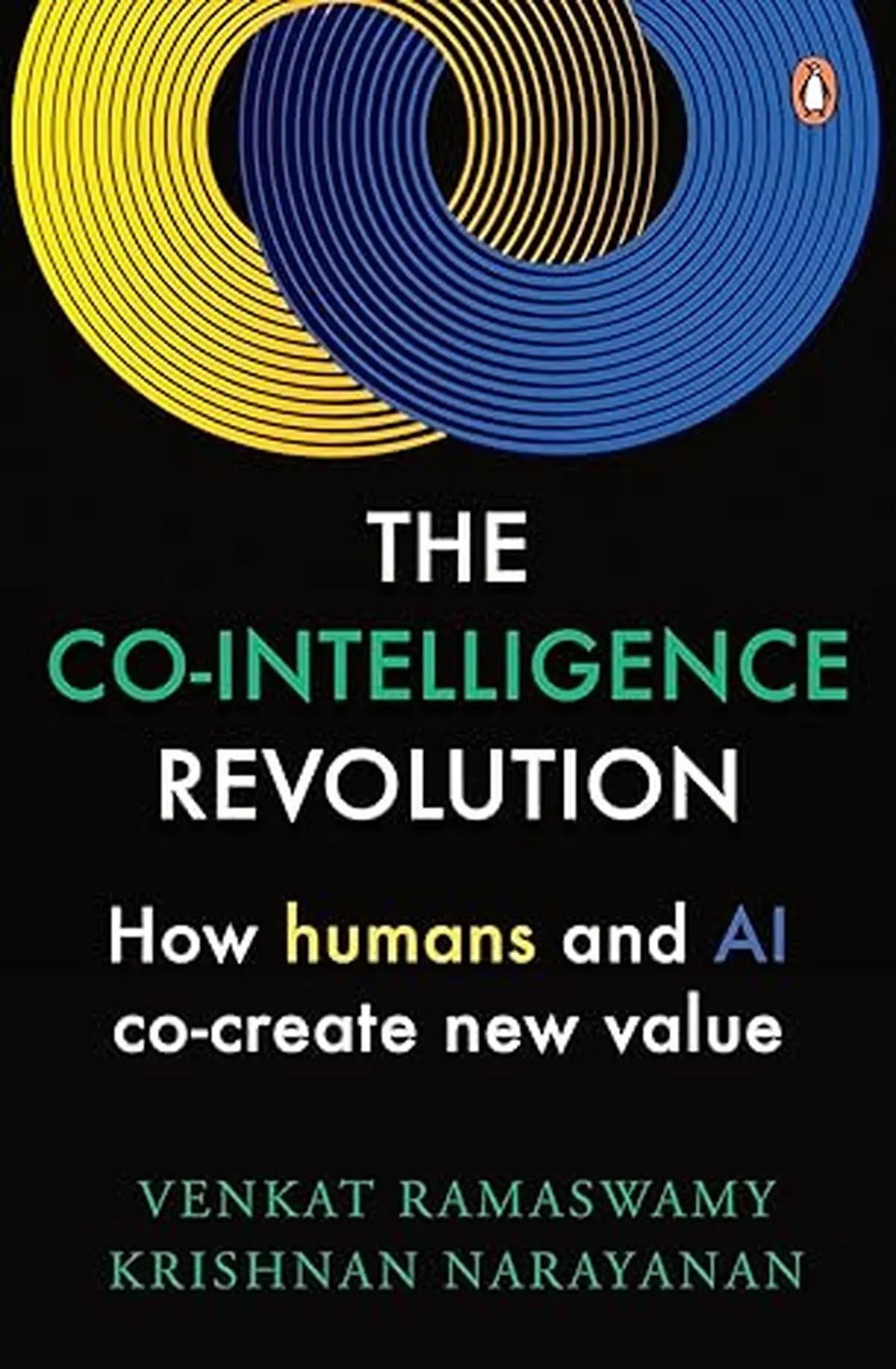
Whether or not artificial intelligence will outsmart human ingenuity has been rested in favor of co-intelligence where both will collaborate in ways never imagined. The new technological revolution is in the future, a visionary road map which will shape our co-existence by reshaping our co-existence. As things stand, artificial intelligence will augment human ingenuity rather than replace it. The Co-Intelligence Revolution is an insightful guide to navigate the frontiers where human ingenuity meets artificial intelligence, it envisions a future in which they are not only powerful allies but collaborate to co-create ground-breaking innovations and transformed institutions. It engages with artificial intelligence as co-worker, co-teacher and coach. 

It is an interesting playbook that draws from numerous real-world case studies to illustrate how co-intelligence demonstrates a paradigm shift in expanding the role and reach of traditional and emerging institutions. The book presents artificial intelligence not just a tool but as a vital partner in the process of co-creation. With over a hundred compelling examples from different ecosystems— from L’OrĂ©al’s inclusive beauty platforms to digital expansion of public finance, citizen-services, and education—the book illustrates how co-intelligent enterprises will unlock their potential across private, public and plural sectors.

Overs last few years, L’Oreal, the 115-year-old global leader in the beauty business has moved from its earlier focus on ‘beauty for all’ to now stress on ‘beauty for each’. Highly personalized beauty routines are delivered through sophisticated cutting-edge technologies, providing skin and skin-care diagnostics to receive personalized recommendations. To achieve such results, the global leader has leveraged over ten large language models to apply neural network techniques that processes lots of data. As a result, L’Oreal is now speaking a new language that leverages tech-intensity to create new life-experiences through its co-intelligence platforms. 

There are several cases where co-creation is pitched to increase efficiency and output. Venkat Ramaswamy and Krishnan Narayanan clearly explain evolving role of artificial intelligence in breaking down complex concepts in an accessible way. In the new realm of co-intelligence, organizations have to craft co-intelligence architectures powered by platforms for sharing digitalized infrastructure. It may be easy read for companies who wish to have AI drive future of their business. There are number of cases where industries are embracing AI as a collaborative partner. Even institutions like the University of Michigan are doing trailblazing work on promoting AI literacy and providing AI access. Its AI services attract an average of 15,000 users a day, and thousands are using these services. If its ten-year vision is anything to go by, the university aim is to develop future-proof educational models. 

The Co-Intelligence Revolution is a latest phase of the industrial revolution, it is the creative synergy between human intelligence and machine intelligence, where AI augments and amplifies human capabilities. And this revolution is technologically driven by electronic neural networks fed with vast amounts of data and put to work with accelerated computing, in a form of AI factory. However, a crucial question is regarding the security and sustainability of AI systems. Unlike in the past, co-intelligence enterprises in the anthropocene must grapple with the reality that their actions may significantly influence the very systems on which they rely.

Venkat and Krishnan have written an insightful guide which suggests that value creation will lead to collaborative experiences co-created by companies and customers. They argue compellingly that AI must be embraced as a strategic partner rather than a mere tool, and that they present several cases where it is made possible. They have painstakingly put together a road map for a better future – one that AI serves humanity, not the other way around. For example, Jugal Bandi, which refers to a duet between musicians, is actually helping multiple language users access information about 20,000 government programs in native languages, regardless of the source language of the information. The rapid diffusion and democratization of AI capabilities is undoubtly remarkable but there is every reason to believe that much more needs to be done.

Despite initial success with several cases, the authors tend to agree that no single example could possibly exemplify the trend. By their own admission, the examples are being used as thinking props. Nevertheless, The Co-Intelligence Revolution remains a clarion call to action in co-creating a new world of possibilities.  

The Co-Intelligence Revolution 
by Venkat Ramaswamy & Krishnan Narayanan
Penguin Business, New Delhi.
Extent: 414, Price: Rs. 999.

First published in Hindu BusinessLine on July 11, 2025 

Monday, November 25, 2024

There is problem in its making

AI promoters are like the snake oil peddlers of the late 18th and early 19th century in America, who exploited people’s unscientific belief that oil from snakes had various health benefits.

The concoctions sold as snake oil didn’t contain what was claimed, it was largely found to be ineffective and in extreme case led to the loss of life. AI snake oil literally means AI that does not work.

However, it does favor us by shining what may not work because research in more than a dozen AI fields have found far-reaching credibility crises. AI Snake Oil uncovers such rampant claims and warns of the dangers of AI when it is controlled by largely unaccountable big tech corporations.

Amidst so much publicity around AI, an amazing hype around artificial intelligence has been generated at the cost of human wisdom. Driven by the desire to quick fix solutions, the hype comes around with questionable generative and predictive answers. Should it not be the responsibility of researchers to separate the milk from the froth?

The professor-student team of Narayanan and Kapoor at the Princeton University have cut through the hype with some clear and crisp writing on how AI fails us daily, and how it might one day benefit us. Interestingly, they comment on new developments in AI in their newsletter AISnakeoil.com.

Jobs threat

That AI will cause sudden mass joblessness seems farfetched; however, it will change the nature of many jobs and decrease the demand for other jobs. Previous waves of automation had similar impact, albeit more abrupt. When typewriter was replaced by word processer the transformation was significant, as it called for a change in the nature and skill of job.

Rarely been a job category been replaced entirely by technology, only elevator operator seems to have disappeared due to automation. Automation often decreases the number of people working in a job or sector without eliminating it.

Called automation paradox, the most common type of impact is a change in the nature of job duties. Last mile phenomenon of automation is of critical importance: it takes previously done job but creates new types of needs for human labor. For those whose jobs are already automated, however, the prospects could be scary. 

One must appreciate that Narayanan and Kapoor have made things simple, which others have tried to make it complex. AI Snake Oil offers a breath of fresh air about both AIs, predictive and generative.

As of today, predictive AI is not on a firm footing. Falling prey to snake oil is crucial when it is known how it fails and even harms people. The problem is how much data we can have and how effective our models are likely to predict the future. Limits to predicting future based on the past data and concurrent trends is fraught with uncertainty. Machine learning therefore can only generate the plausibility of what the future might hold.

Proponents of AI know the limits but do not want any reputational damage as yet. A 2023 paper claimed that machine learning could predict hit songs with 97 percent accuracy, however, in reality the study’s results are anything but false or even bogus. Earlier studies do bear testimony to it, although such papers about ‘frightening accuracy’ have the potential to revolutionize the music industry.

Who would not want to spin money based on such a hype? Overall, more than a dozen fields have compiled evidence of widespread flaws but none of it has been publicly accepted, but the supply of snake oil comes from companies that want to sell predictive AI.

Capital theory

“Fears about automation/technology are fears about capitalism.” As companies are driven by profit, AI is expected to generate profit. More than technology, it is capital which is at the core of the entire debate. Big Tech companies have gotten so rich off of AI that they can easily mold public perception.

Academic research and tech journalism too are completely dependent on industry funding. It is this aspect that Narayanan and Kapoor have tried to bring up honestly in their book. Painting AI with a single brush is tempting but flawed, they say. AI Snake Oil is all about why there is so much information, misunderstanding, and mythology about AI.

There is a collective learning, but non-acceptance of common follies. Everyone is found guilty of telling untruths – if not to one another, then to themselves. Certainly, everyone in AI fraternity is found guilty of that. Most of the time, what we think of as truth is threaded with self-serving distortions. AI Snake Oil has everything you ever wanted to know about AI. 

AI Snake Oil
by Arvind Narayanan & Sayash Kapoor
Princeton University Press, USA 
Extent: 348 pages. Price; Rs. 699,

First published in the HinduBusinessLine on Nov 25, 2024.

Sunday, May 26, 2024

The existence under shadow

Much has been written about and much will get written about the generative artificial intelligence, or AI, that is fast revolutionizing the way we work, study, and consume. In this rapidly changing world of automated decision making that is influencing our behavior, what does it mean to be human hereon remains an impending question. Delighting us with the humanlike ability to write, visualize and talk back, AI has crunched large data to free us from our own actions. Come to think of it, machine is taking back our agency and self-respect.  

Proponents of AI may loathe at the idea of pinning down technology’s dramatic progress in its early days, however, the glaring fact is that limiting human ability to decide and direct its actions hold fundamental contradiction to our evolution as a species. Little is known about how machine-learning models draw statistical inference from volumes of data at its disposal. With quantum computing set to exponentially enhance machine’s ability to intuitively mimic processes, the advent of AI raises more questions than answers. 

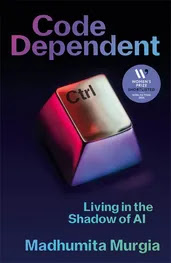
Code Dependent is not about how technological infusion is empowering algorithms but how AI has insidiously entered our lives and altered the very experience of being human. With over a decade of experience in writing and reporting on AI for the Financial Times in London, Madhumita Murgia explores what the rise of AI means for us as a society. It is a story on AI with a human face, told through the lived realities of nine unrelated persons from across the world. The stories are chilling, calling for an urgency to act before AI takes over. What comes out is an absorbing and engaging narrative. 

These stories look at everyone from underpaid gig workers to an activist, a refugee, a single mother, a doctor, a bureaucrat, and a priest. Through these case stories, Murgia examines all the relevant facets of life, from livelihood to society and from freedom to future. What comes out clear is that ‘surveillance capitalism’ is the denominator which guides the business model that monetizes personal data. Amid all the hype and frenzy around AI, there is little denying that the prejudices of those who create it gets amplified. For instance, facial recognition camera is biased towards fair skin, religious minorities, migrant and refugees, and religious minorities. Backed by data colonialism by tech-giants, any scalable system under the capitalist economy is built to benefit large groups while excluding the other. This can only trigger exclusion and inequality.        

Each of the stories make it clear that AI is out to compromise our agency and shatter our illusion of free will. Data workers are as vulnerable as factory workers, they remain an undervalued bedrock of the AI industry. The algorithms that create deepfakes target women, who are hypersexualized by technology. Facial recognition has empowered police to exercise nuanced judgement, promoting widespread human rights abuses. In a world wherein AI promotes surveillance, censorship and control, freedom is the first that gets compromised with dissent becoming irrelevant. The stories in the volume are disturbing, exposing powerlessness and vulnerability in a world turbocharged by AI. 

Generative AI has raced through the economy without any of the compelling questions being addressed. Will so-called knowledge workers still have work in few years' times? Who owns the rights to all of humanity’s creative outputs? Will white collar jobs continue to exist as they are? How can a society be sustained without work? The trouble is that people – scientists, economists and politicians – who are supposed to have answers to such questions are as much in dark. In the post-truth era, controlling AI from producing false or biased contents will remain a challenge.

Murgia is clear thar AI is a way to augment human intelligence and solve impossible problems but has utility when it preserves human dignity. To preserve human agency, the author has drawn a checklist of guiding principles to ensure that algorithms are not without ‘algor-ethics’, a basic framework of human values to be agreed upon by multiple stakeholders around the world and implemented by machines. Written with empathy and deep concern about the future of mankind, Murgia raises question on the unrestricted idea of selling back our dreams repackaged as the products of machines. Code Dependent makes for compelling reading as it concerns everybody. It concerns the impact of AI on our collective future.  

Code Dependent 
by Madhumita Murgia
Picador India, New Delhi 
Extent: 311, Price: Rs. 699.

First published in Deccan Herald on May 26, 2024.

Sunday, December 17, 2023

AI : Where is the control key

The proliferation of technology in waves has been the story, but what if the wave turns out to be a tsunami?

As has been during the previous technological waves – the steam, mechanical and fuel automation - there remains both denial and stoicism for the coming wave of artificial intelligence, A.I. Will the new wave be useful or dangerous, or both. While there are skeptics who argue that the power of AI. has been overestimated, there are others who believe it will accelerate unprecedented human progress. Geoffrey Hinton, known as the father of AI, is worried that artificial brains may indeed transcend human limits. As the boundaries between the real and the virtual are fast disappearing, technology is indeed expanding what it means to be human. 

Each technological wave in the last 100 years did change the world despite Luddite protests, named after a mythical figure, called Ned Ludd, that had challenged automation of textile manufacturing to begin with. Their pain and disruption were real, but so have been the improvements in living standards that we enjoy unthinkably till today. The proliferation of technology in waves has been the story of Homo technologicus ever since, but Sulayman’s concern is what if the wave turns out to be a tsunami? With AI fast outperforming all human cognitive abilities, the unprecedented opportunities on offer hold dangerous consequences too. 

The basic premise for any technological progress is to enrich our lives, and that has broadly been the case with it thus far. However, artificial intelligence and synthetic biology are two general purpose technologies whose scope of impact still remains understated. Given that these technologies hyper-evolve with an increasingly autonomous asymmetric impact, it generates powerful incentives for geopolitical competition with massive financial rewards but without a strong regulatory mechanism. The consequences of AI powered automated wars, bio-engineered pandemics, and technological authoritarianism have already been put to practice. A founder of two AI companies, Sulayman stresses the compelling need for ‘containing’ uncontainable technologies because our species is not wired to grapple with technological transformation at this scale, let alone the potential of technology to belittle and fail us.   

The Coming Wave is absolutely clear, seamlessly compassionate, and immensely powerful listing of the most consequential issues of our times. Behind technological breakthroughs have been people but not anymore as AI has taken over people in the present scheme of things. Think of Open AI’s GPT models which are brain like as they involve billions of artificial neurons, profoundly different from human brain. The artificial neural nets don’t acquire knowledge organically as humans do, by having experiences and reality, but use a combination of data immortality and computing replicability to take over biological intelligence. 

There is no denying the fact that AI and immersive media will permeate society, blurring the boundaries between the real and the virtual while unleashing significant new risks to our privacy, autonomy, and even our identity. Not far is the time when the majority of our daily interactions will not be with other people but with AI, if not already there. While unfolding significant features of the technological wave of intelligence, Suleyman enlists several critical aspects that hold the potential to amplify fragility of human survival – with a power to destroy us as well. In saying so, however, the techpreneur author remains optimist.

Global living conditions may be better today than at any time in the past, yet there is lot yet to be achieved.  The Coming Wave cautions that even in best-case scenarios the coming wave will be an immense shock to the systems governing societies. The question worth exploring is whether the nation-states are in any shape to meet the challenges ahead? Declining public trust, rising inequality, and a warming climate is unlikely to absorb the destabilizing force of the wave. The essential challenge, the author argues, is to maintain control over powerful technologies.  

AI is not only a technology but a way of future life that is hard to imagine and comprehend. No wonder, following the release of GPT-4, thousands of AI scientists called for a six-month moratorium on further research on the most powerful AI models. Despite debates and discussions on the emerging possibilities of AI, rarely anything is heard about containing it. Suleman makes a compelling case for policy makers and security experts to address the ‘containment challenge’ by developing regulatory framework for AI that works well in places as diverse as the Netherlands and Nicaragua, New Zealand and Nigeria. The Coming Wave provides a much-needed narrative on the potentially anticipated and yet disastrous consequences of AI. The easy-to-read book provides a persuasive roadmap for containing the technology rather than to be contained in it. 

The Coming Wave 
by Mustafa Suleyman 
Bodley Head/Penguin RandomHouse, New Delhi
Extent: 332, Price: Rs. 799.

First published in Deccan Herald on Dec 10, 2023.

Sunday, January 2, 2022

Is it getting beyond us?

The boundary between humans and machines is getting blurred as AI adds a nonhuman concept of the world into scientific inquiry, discovery and understanding.

Human intelligence is literally at stake, as Artificial Intelligence (AI) with its ever increasing capacity to learn, evolve and surprise is becoming a ubiquitous enabler. From online shopping to medical research, and from unmanned aeroplanes to autonomous weapons, machines performing human-level intelligence have rapidly become a reality. And, these are not done yet. Using new algorithms and inexpensive computing power, the machines have become capable of producing insights and innovations that are often  beyond humans. With AI assuming a majority of social roles, it is challenging our understanding of reality and our role within it. 

AI is indeed helping the human mind in accessing new vistas, bringing previously unattainable goals within sight. Who would have imagined chess game AlphaZero to outsmart grandmasters by deploying unorthodox tactics. Antibiotic Halicin discovery by an efficient and inexpensive technique remains beyond human conception. On the destructive side, AI-enabled weapons have the potential to launch digital attacks with exceptional speed and make conflicts more difficult to limit. Illustrative as these examples may be, the trouble with AI is that it accesses reality differently from the way humans access it, and therefore generates outcomes which are not only unpredictable but often inconsistent. When intangible software acquires logical capabilities, it is bound to pose challenges to human perception and cognition.   

Former US Secretary of State Henry Kissinger, former Google CEO Eric Schmidt, and MIT computer scientist Daniel Huttenlocher assess the challenges AI-powered technology poses. They rest their primary discernment on Rene Dascartes’ enlightening promulgation ‘I think, therefore I am’ which reverberates today as a compelling question:‘If AI thinks, then who we are?’. By devising solutions beyond the scope of human imagination, AI will assert the supremacy of nonhuman learning and application. It already does by altering the role our minds have traditionally played in shaping, ordering, and assessing our choices and actions. The authors weigh the future by asking whether or not the humanization of AI-powered devices are creating confusion on what it means to be human, what is intelligence, and what is consciousness?

The boundary between humans and machines is getting blurred as AI adds a nonhuman concept of the world into scientific inquiry, discovery and understanding.  However, the advent of AI obliges us to confront whether we are comfortable with what we know through human reasoning or are prepared to engage with algorithm generated logic.The Age of AI is a reflective primer on a subject that is fast becoming a reality of modern life. It helps raise thought-provoking questions on the impact of AI on our relationships with knowledge, politics, and society. Whether an individual can find space for careful thinking in this emerging future is one matter. 

The authors are convinced that AI is a grand undertaking with profound potential benefits, as it unleashes new scientific breakthroughs, new economic efficiencies, new forms of security, and new dimensions of social monitoring. However, they are also clear that AI is equally capable of distorting and presenting information that may misguide consumers capacities for independent reasoning. ‘The dilemmas AI raises for societies are profound,’ say the authors. With much of our social and political life dependent on network platforms, securing space for debate and discourse that form public opinion is discerning to uphold democratic principles.

The Age of AI paints a broad brush on AI and its potential to alter the trajectories of societies and the course of history. The game changing features of AI are all but known, and the book doesn’t cut a new ground on that. What it does, however, is to seek ways to make AI auditable – making its processes and conclusions both checkable and correctable. To that effect, Henry Kissinger lends his diplomatic weight to the need for international accords on the use of AI, as the machines are already showing the promise of outstripping some of our mental processes, that will allow us to ‘make peace with them and, in so doing, change the world.’

At an individual level, the book does ring a bell. It lets the reader know that human reasoning and autonomy is at stake, and it is upto us to limit how much of it we intend to bargain for. Should we take AI proclamations by faith, like the proverbial Greek Oracle, from clear evidence that they are superior or should we pick and choose the relevant? In a world where plurality is being marginalised, should we rely on a single voice that delimits our choices. The Age of AI calls upon political leaders, philosophers and theologians to probe AI’s deeper implications in making human life fulfilling. The time to define our partnership with artificial intelligence is squarely upon us. 

The Age of AI 
by Henry Kissinger, Eric Schmidt, Daniel Huttenlocher
John Murray/Hachette, New Delhi 
Extent: 256, Price: Rs. 799.

First published in Deccan Herald on January 02, 2022 

Saturday, September 28, 2019

The surrender of intelligence

While there is no denying that algorithms have eased life by managing the information explosion, that it does so at the cost of reducing rich diversity into a world of niches has often gone unnoticed? 

Google does what confidantes used to, lending advice for resolving personal and professional matters. Seeking out friends for addressing life’s travesties are seemingly passĂ© as algorithms powered machine intelligence offers a staggering number of options. Think of a question, and Google has an answer. Smart gadgets have eased life by conducting mundane tasks of picking the best on offer, be it a piece of clothing or a restaurant of choice, and have thus made a vast majority believe that algorithms are all set to turn the tables on human intelligence, and run every aspect of our lives henceforth. 

The jury is still out on whether machine intelligence will make the cut in mimicking human brain. While there is no denying that algorithms have eased life by managing the information explosion, that it does so at the cost of reducing rich diversity into a world of niches has often gone unnoticed? What it does with a vast array of large data-sets and how it manipulates the same to generate preferences smacks of dystopian possibilities! Not without reasons issues related to data security and the privacy of citizens are proving contentious. Machine-driven artificial intelligence has its share of both intended and unintended consequences, warns Kartik Hosanagar. Drawing upon his experience of designing algorithms, the Wharton Professor brings on the table the potential risks of being blindfold to the ramifications of algorithmic decision making. 

By design, algorithm is a simple step by step method of resolving any problem by acting on available data-sets to draw recommendations on our behalf. As the users interact with algorithmic suggestions, the next generation of data is generated for it to work on, and so on. In the process, biases creep into algorithmic systems that intentionally narrows down the list of available choices leading to unintended consequence of creating digital echo chambers that have the potential to influence or control human behavior. Should algorithms be limited to serving our desires or allowed to stake control on human behavior?  

A Human Guide to Machine Intelligence weighs opportunities and challenges posed by modern algorithms to give the reader a nuanced understanding on how far it can go to serve us. There are safety-critical areas like health care and entertainment where machine intelligence does have a role to play, in behavior-centric domains like recruitment and therapies machine intelligence has the potential to go rogue. The case of Microsoft’s chatbot 'Tay' turning sexist and racist on the social media is a case in point, and so are the episodes of much-hyped self-driving cars meeting their fatal crash. Despite all this, machine intelligence is here to stay with its promises and pitfalls. ‘To discard them now would be like Stone Age humans deciding to reject the use of fire because it can be tricky to control.’  

As algorithms are fast transiting from their decision support role to becoming autonomous decision makers, the question of human’s leaving life entirely in the hands of a computer has refueled man-machine debate. Though an anathema to our craving for control, there are many significant instances where we have let the machine control our life. Auto pilots have been in existence for long, and so are button-controlled elevators. Research has shown that more than control, it is the trust in algorithms that is central to its acceptance. Since algorithms are seen as robotic and emotionless, the challenge before researchers is to develop trust-inducing interfaces for mistrust, hostility, and fear to melt away.  

Backed by latest developments on the subject, Hosanagar argues that transparency is the major factor in fostering trust in algorithms. Unless the tangled vines of transparency and trust are unfurled, people will continue to view machines for their limited ability to mimic our patterns of thoughts and conclusions. It is for this reason the electronic voting machines have yet to increase public confidence in the sanctity of the ballot. Electronic voting system is perfect example to lay bare the challenge of harnessing the power of transparency to induce greater trust in algorithms as more difficult than one might assume. The world is yet far from a robust, tested protocol for algorithmic transparency, which remains the biggest stumbling block on its progress. 

In the post-truth era, algorithms have greater challenge to win trust of its users. The problem, as Hosanagar elaborates, lies in the fact that most of the algorithms are created and managed by for-profit companies who protect it as highly valuable forms of intellectual property. If the companies were to let their algorithm source code known to the public, the chances of the systems being manipulated to serve vested-interests can be endless. If Google were to let its source code be known, internet companies can trick the search engine into ranking their websites higher, without concurrent improvements in their contents/services. Resolving the predictability-resilience paradox is next on the agenda to increase algorithms’ social acceptability. 

Seized of the fact that algorithms are heading towards reaching human-level intelligence in processing data and the scale of their impact touching billions of people, Hosanagar advocates developing a set of rights, responsibilities, and regulations to negotiate the unintended consequences of algorithms, including their failures and the steps required to correct them. Without doubt, such an initiative calls for cooperative efforts between the industry and government watchdogs. Because, the role of algorithms is not to accentuate human biases but to curtail them. It is in this regard, Hosanagar’s proposal for an Algorithmic Bill of Rights is timely at defining the boundaries of a responsible machine intelligence behavior. Because unlike chess, for algorithms the game continues even after checkmate.

A Human’s Guide to Machine Intelligence
by Kartik Hosnagar
Penguin Portfolio, New Delhi
Extent: 262, Price: Rs 599.

First published in the Hindu BusinessLine, issue dated September 16, 2019.

Monday, July 9, 2018

The coming of conscious machines?

The development of thinking machines evokes as much hope in the future as fearful dystopia.

Mankind has gone through three distinct turning points in its evolutionary history - discovered fire 100,000 years ago; developed language 10,000 years, and invented wheel 5.000 years ago – which triggered multitudes of other advances that have revolutionized human existence. Since then, within the overall arc of human history, not much seems to have changed. Else, we wouldn’t be living like those who lived five millennia ago, with parents and pals in cities with markets and governments. And, we wouldn’t fear life, share gossip, build relationships and celebrate birthdays like those in the past. Isn’t it a trivia that lot has changed without much remaining the same?

With a deep understanding of human history, tech entrepreneur and futurist Byron Reese offers a nuanced understanding of the change that is at our doorsteps, in the form of what he terms ‘the Fourth age’. This age will unleash the power of artificial intelligence and conscious computers in our daily existence, seemingly intelligent non-humans who will act autonomously to perform tasks that will ease our lives. There is every reason to believe that automation will bring efficient and healthy living within the reach of everybody on the planet. The prevailing technological turbulence will bring about dramatic breakthroughs in artificial intelligence and robotics in the next fifty years compared to what has been witnessed during the last five thousand years. 

The next generation artificial intelligent machines will outsmart its predecessors – from self-driven car to the talking robot – by being as smart as you and me. These will do more than what it would have been programmed to do, by figuring out what the new task expects it to perform. Within the emerging world of artificial general intelligence (AGI), the development of thinking machines evoke as much hope in future as fearful dystopia. Will machines make human redundant? Will smart automation gobble up all the jobs? Will it usher permanent Great Depression? 

Since it is about the change we haven’t seen yet, any discussions on the subject leads to confusion and misconception. The confusion is further compounded when the likes of Elon Musk, Stephen Hawking, and Bill Gates propound that artificial intelligence is a fundamental risk to the existence of human civilization, while their illustrious compatriots Mark Zuckerberg, Andrew Ng, and Pedro Domingos lend weight to the argument that human future is safe in the hands of intelligent machines. Despite such polarized positions, the foremost fear concerning AGI is about its impact on jobs. Fears of a permanent Great Depression are beginning to cast its impact on people in the streets. Everyone seems to be asking: Will I lose my job? Will smart robots eliminate more jobs than the economy will create?  What should I do to protect my job? 

Reese takes the question head on, although it is devilishly complex because it isn’t known what all jobs robots can replace; to what level business will invest in developing artificial intelligence; and how will cost of labor impact the adoption of technology? Therefore, it is not a back-of-the-envelope calculation to determine the net effect of technology on jobs. What is perhaps easy is to realize that there are just three possible scenarios i.e., robot will take all jobs; robots will take some of the jobs; and robots will take none of the jobs, to make some sense of it.

Without doubt, introduction of technology does reduce the need for workers in particular sectors. Although the transition is often difficult, those eliminated from low-skilled jobs graduate into improving their skills to take on different jobs. However, the question is whether these numbers add.  The Bank ATMs and online trading websites are two interesting examples. It did rattle the bank tellers and the stockbrokers but over time technology has not only helped employ more people in building ATMs but the stockbrokers have exhibited their cognitive abilities too. The erstwhile low-skilled jobs have gained value through the use of computing technology. 

Although understanding the ever-expanding job market is mindboggling, no visible relationship between the use of robots and loss of job has yet been established. Despite the installation of far more robots between 1993 and 2007, Germany lost just 19 per cent of its manufacturing jobs compared to a 33 per cent in the US. Same has been true in other countries such as Italy, South Korea, and France that deployed more robots, lending credence to the widely held view that technology mostly augments workers, not replaces them. On top, people have always been able to create new jobs, more in the changing time now than ever in the past.   

The Fourth Age is about comprehending the accelerating change, and about understanding the universals of technology that drive progress. Understanding those universals will give us new insights on humanity’s unmistakable journey toward social justice and personal empowerment aimed at liberating humans, in the words of Charles Dickens, from the clutches of dehumanizing jobs. The need is to gain clarity on duality of co-existence with machines.

For robots to replace humans at home and in the workplace, AGI would need to exhibit the entire range of the various types of intelligence that humans have, such as social and emotional intelligence, the ability to ponder the past and the future, as well as creativity and true originality. To overcome the hurdles of attaining consciousness in computers, Elon Musk is proposing commingling computers with human brain to take directions. To make the best of both, the challenge lies in decoding the billions of synapses between a hundred billion neurons.  

While the cost of building robots is coming down, the challenge to build an AGI on the structure of the human brain has yet to show any tangible results. After spending a billion of dollars, the Human Brain Project is in total disarray. Reese provides a detailed account of the current competing societal perspectives on the relation between humans and our machines, on accelerating technological change, and on the future of mankind in a world of robots and humanoids. 

The core of the argument, however, is draw distinction between monism and dualism as two dominant beliefs about the nature of reality. While for monists creating a machine with human attributes is a serious possibility, dualists fervently disagree that a silicon-based computer will ever grasp the intricacies of a carbon-based human. Science is nowhere close to describing something like consciousness yet, but our relentless move forward and upward characteristic will reduce us from being Homo sapiens to Homo dissatisfactus. Byron Reese takes the reader into the rapidly unfolding world of artificial intelligence and robots, the one that is sure to revolutionize our physical being but our mental domain as well. Without doubt, The Fourth Age, is upon us. 

The Fourth Age
by Byron Reese
Simon & Schuster, New Delhi
Extent: 320, Price: Rs 399.

First published in the Hindu BusinessLine, dated July 9, 2018.