Sunday, July 26, 2020

Anything, but not about future

Water future is in the hands of an archaic water sector, predominantly under government control, and afflicted by business-as-usual approach.

Cape Town achieved ‘Day Zero’ not too long ago, sending alarm bells ringing across the urbane world to set in order its water management system to avoid being next on the new nomenclature for cities. Despite it being clear that improved water management requires better coordination between demand and supply while keeping a close tab on the source, water scarcity continues to haunt human habitations like never before. No surprise that quite a few cities have already started vying for the second position. With depth to groundwater level having slumped to 93.7 per cent during the last decade, and with most water bodies consigned to unrestricted development, Bangaluru continues to be in the race for such dubious distinction. 

Water crises is at the tipping point across the world. In their 2018 study published in Nature Sustainability (1, 51-58), Martina Florke, Christof Schneider and Robert McDonald had projected an urban surface-water deficit of 1,386–6,764 million m³ affecting one-third of the 482 world’s largest cities studied. The study had concluded that by 2050, Jaipur will be the city with the second-largest water deficit in the world, Jodhpur 14th and Chennai 20th. Several other studies point to the fact that a grim water future is staring all across, with its implications cutting across the socio-economic fabric of the society. In light of the emerging scenario(s), a volume on Water Futures of India assessing the status of science and technology in addressing the impending crises evokes interest. 

Initiated by the Indian National Science Academy (INSA), and supported by two projects at the Inter-disciplinary Centre for Water Research (ICWaR), the edited volume comprises of chapters written by eminent scientists and engineers engaged in water research and practice with an aim to bring to light the status of water science and technology in dealing with the current and emerging water crisis. From water trapped in deep aquifers to that locked in glaciers, and from what flows on the surface to that floating in the atmosphere, science and technology of understanding water in its different forms and settings has grown in leaps and bounds. Seemingly, science is now able to account for each drop of water as it moves through the consumptive systems. Paradoxically, however, the more is known about the universal solvent, its source and flow dynamics, the less is at the systems’ command to resurrect the elixir of life to its pristine glory.  

Given its growing demand, moving water on a circular economy pathway has emerged as an opportunity to accelerate and scale-up recent scientific and technological advances supporting greater efficiency across sectors. Within the regulatory market space, the value of existing practices and technologies that enable navigation through the water pathway, the material pathway, and the energy pathway allow a shift from ‘take-consume-dispose’ model to strategies based on demand management, resource diversification, operational optimization and nutrient recovery. However, limiting itself in scope Water Futures of India remains restricted to addressing water challenges from an interdisciplinary perspective. 

Covering subjects ranging from groundwater hydraulics, glacier hydrology, desalinization technologies, sediment dynamics, and isotope hydrology, authors suggest several new tools and techniques to address geophysical complexities within the limited experimental domains. The comprehensive list of scientific challenges raised in the opening chapter, however, remain grossly unaddressed. The volume broadly acknowledges such gaps in connecting cutting-edge science to policy and practice, but none of the contributions break free from the confines that public-funded science and technology has come to be identified with. Consequently, in part it reads like a text with the remaining a subject of research, being researched. 

Water Futures in India raises questions on the directions and relevance of public-funded research on a subject as critical as water. Why it remains at a distance from addressing societal problems? Why scientific research doesn’t influence policy? Why communicating science with other stakeholders remains limited? While technological developments are urgently needed to improve efficiency of water use across sectors in a circular economy pathway, it needs to be underpinned by a strong policy response to ensure its effectiveness.     

Part of the problem lies in water sector being archaic, predominantly under government control, and afflicted by business-as-usual approach. Consequently, it lacks progressive vision and poor adoption of innovative techniques. Given the fact that there is no formal science-policy interface that encourages applied research with the aim of adopting science to improve sector performance, much of the high-end research remains fodder for research journals only. Given large scale spatial and temporal variability of water in the country, role of scientific tools, methodologies and technologies in addressing water issues cannot be undermined.

Water Futures of India falls short of making a desired impact. It is an assortment of randomly selected papers/articles which do not measure up to the expectations from such a volume. Given the fact that not all science produced in the country is applicable on the ground, the volume could have been better designed to position the contents against a futuristic framework. Nonetheless, it has been an ambitious undertaking with a limited shelf life.       

Water Futures of India
by P P Majumdar & V M Tiwari (Eds) 
IISc Press, Bangaluru
Extent: 481, Unpriced

First published in AnthemEnviroExpertsReview, Sept 2020

Wednesday, July 15, 2020

Delhi’s Subterranean Truths

It is not the distance but the approach that creates connection of convenience between shades of insecurities and vulnerabilities. 

Hold it tight. The rickshaw ride could turn unruly as it meanders through the underbelly of an unalike city that undervalues the compulsive human-driven commuting that crisscrosses its bye lanes. Ipshita Nath’s debut of  dozen stories of rickshaw rides are an act of poignant meditation amidst searing crowds who are oblivious of the realities simmering at the bottom of the city’s shaky foundations. The mute rickshaw is the inanimate character that ferries the stories of embedded frustrations, guttural aspirations, and discreet reflections. Are these the lived experiences of subterranean existence that help theorize situations of the mind as it grapples with the bizarre and mundane? 

That is, until one reads to find that the rickshaw is a mute witness to situations and characters that are in constant conflict with each other. The twelve short stories in the book are interesting in terms of imagination and reach on the study of being, and about nothingness. While Balram’s jerking of carnal lust provoked animal instinct that weighed brutally upon him, Jugal’s desire for justice ruthlessly dismembers those who evade the hands of law. The stories of Balram and Jugal emanate out of irresistible desires, with strength and vulnerability negotiable within the realm of human thought and action. The rickshaw only helps connect the dots between the extreme realities.  

Nath’s rickshaw pullers are ordinary people pursuing the extraordinary within the make-shift world of possibilities. For them, the forbidden Khan Market and luxurious Dubai are only few peddles away. It is not the distance but the approach that creates connection of convenience between shades of insecurities and vulnerabilities present at different levels in the society. ‘It was all pervasive; an omniscient scent of rot sitting over a narrative of deterioration so great that it seemed larger than life, like a miasma of some eternal putrefaction.’  

Imaginative and unusually enticing, this collection of short stories place the unknown rickshaw pullers, their feelings and minds at the centre. Through that the stories peep into what goes on in those minds: surge of mistaken adventures, provocative wrong choices, and multiple shades of love and desire. The Rickshaw Reveries is bold and adventurous, a collection that represents a strange case of rickshaw pullers’ as an agency without a distinct social identity. Within the stories, life exists on the edge of a precipice but throbbing with life nonetheless as if there is no tomorrow. Flowing in the cesspool of love and desire, the bittersweet experiences reflect a sociology of their own. 

For existence that is practical and somewhat hard-hearted, the trade-off in rickshaw pullers’ life is often at the cost of life itself. Could it be any other way? Nath captures the undercurrents of the trade-off that lunges hubby Mounir full hog to procure a color television that breaks into Shabana’s conditional frigidity. A television set did the trick but at the cost of him losing vision to acute sleep apnea, but Shabana seemed strangely at peace. Strange are the ways of love, which is sometimes unrequited and at other time returned for a heavy price. 

With stories that are disturbing and discomforting, The Rickshaw Reveries unearths shades of truths lying at the cross section of an informal economy. Their survival goes unnoticed, so is their death. Pushed to die at the landfill of civilizational footprints, the life less lived becomes feed for vermin who scavenge a feast out of them as flying eagles keep an eye on it. There are sub-stories within stories that smack of our collective insensitivities. The stories are not about understanding the rickshaw-wallahs but to live and breathe along their dreadful existence.

Engaging with the metropolis is a genre that is gaining literary currency, and Ipshita Nath has demonstrated her ability at getting inside the bewildering realities of urban spaces. She has a narrative skill that is engaging and engrossing, the stories linger longer after reading them. The ubiquitous rickshaw connects these stories of madness, but there is indeed a method in the madness. Packed with real life anecdotes that play along the stories, a flavor of authenticity is lent to the narrative. Without doubt, the author would have wandered the bye lanes on a rickshaw to piece together realities that enhance the value of imagination.  

If attention to language, strong imagination, and formal inventiveness are essential indicators of good fiction, Nath ticks all the boxes with reasonable competence. To me, storyteller Ipshita Nath has arrived riding on a rickshaw!
  
The Rickshaw Reveries
by Ipshita Nath
Simon&Schuster, New Delhi
Extent: 286, Price: Rs.350.

First published in The Book Review, issue dated July 2020.

Sunday, July 5, 2020

Unearthing past without discrimination

National chauvinism does not go very far – even where it goes it only acts as a delusive will-o’-the wisp.

Historian T.C.A Raghavan excels in telling story, or rather stories, of history writing in a fascinating account of three historians who shared much in common about their single-minded passion for details in reconstructing the historical past. Coming together of a knighted professor in Jadunath Sarkar, a committed civil servant in G.S. Sardesai, and an unassuming prince in Raghubir Sinh produced volumes on the intricate interface of history that had fading Mughals, rising Marathas and struggling Rajputs at the centre of an immense political flux in the country. History Men captures the intensity of their relationships, often at intellectual variance with each other, in producing history free from its ideological biases.

Sarkar’s multi-volume research on Aurangzeb, Sardesai’s authoritative study on Marathas, and Sinh’s insights on tussle between Marathas and Rajputs are significant historical outputs, but it was the extraordinary fellowship between the three that created a benchmark for scholarship in history writing. All three had a voracious appetite for unearthing facts of history and a near obsession with establishing factually chronology through primary sources. As historians they sought to speak the truth at a time, during early 19th century, when history was under the threat of being appropriated to further the pursuit of nationalism. The discipline of history continues to be confronted by such reality even today. 

Through a commentary on trio’s published research and reflections on their unpublished exchanges, Raghavan examines the challenge of history writing both as a discipline as well as a piece of heritage. They had their share of disapproval and criticism for judging the historical characters as they did, but remained firm in their historian resolve of seeking truth, understanding truth, and accepting truth. That has been the enduring legacy of these three medievalists. Towards the end of his life, Sarkar had reiterated that ‘national chauvinism does not go very far – even where it goes it only acts as a delusive will-o’-the wisp.’ 

Constructing history by mounting joint exercises and expeditions contributed a distinct flavor to history writing, by which the three could infect each other to connect geography and topography of the place(s) with characters’ ambitions, achievements and regrets. Such an approach helped history vibrate with life and vigor born of the personal acquaintance with the site of important historical event. For instance, without a visit to Afzalpura, near Bijapur, it would not have come to light that a premonition of his coming end had impelled Afzal Khan to kill and bury all his 63 wives. The tombs of the same shape, size and age close to each other bear testimony to it. 

Historical events in the Mughal-Maratha-Rajput interface interested all three historians in exploring every possible nuance in drawing both the minutiae and larger generalizations. While the killing of Afzal Khan continues to be the wildest exultation among the Marathas but for historians the question worth exploring was to ascertain if his slaying was a treacherous murder or an act of self-defence on the part of Shivaji? Regardless of antagonism and alienation from their own fraternity, the spirit of inquiry and endeavor in research remained foremost in the minds of these historians. Had Rana Sangha not invited Babur from Kabul to destroy Ibrahim Lodi, the medieval period would have been a different history? 

As much a tribute to the incredible contribution of Sarkar, Sardesai and Sinh to the art and science of history writing in the country, History Men makes for an engaging and compelling reading. That the three historians were committed to the Rankean approach to the practice of history is an essential take home for those interested in pursuing the discipline of history. 

History Men
by T C A Raghavan
HarperCollins, New Delhi
Extent: 427, Price: Rs. 799.

First published in The Hindu, issue dated July 5, 2020.

Saturday, May 30, 2020

Wordsmith par excellence

No contemporary poet has been capable of engineering thoughts on social awakening through poetic lyricism. 

Such has been its lyrical contemporariness that main zindagi ka saath nibhata chala gaya has been taken to heart by even the millennial generation, justifying the adage ‘you can’t have enough of Sahir’ which best describes the work of iconic poet and lyricist who remained an enigma all his life. A poet who consciously chose to call himself sahir – meaning a wizard – created lyrical verses with an aura of mystical mastery, earning a place second only to legendary Mirza Ghalib in poetic excellence. Unlike Ghalib, however, Sahir’s literary output has been restricted within the linguistic boundaries where it was watered and sustained. Surinder Deol deserves credit for lifting such restrictions by spending time to give wings of translation to over ninety of Sahir’s literary creations to make them fly across the world to spread the poetic fragrance. 

An accomplished translator of urdu poetry, Deol puts under critical scrutiny a selection of poems, ghazals and bhajans from Sahir’s creative oeuvre to present a mosaic of his poetic dexterity for a non-native readership. While ensuring that the translated verses carry the essence of the accompanying original, the preceding thematic summary touches upon contours of poet’s twisted relationships and impact of life’s bittersweet experiences on his work. Sahir’s troubled childhood and equally troubled relationships found a permanent place in his poetry, making it difficult to separate the poet from his poetry. That’s perhaps what made Sahir stand out, and stand tall.        

Drawing a portrait of his enigmatic personality in a foreword to Sahir – A Literary Portrait, noted literary theorist Gopi Chand Narang acknowledges Sahir’s proclivity as a lyricist in connecting with listeners’ deep-seated emotions and longings but argues that his giving up on the literary life was a loss as ‘there was a lot more left unsaid’. However, living life on his own terms Sahir had instead claimed that his song writing was close to literary poetry, and more potent in reaching out to millions of people who rarely access literature. Critics may hold it differently but Sahir was first a poet and then a lyricist, the only songwriter whose poetry made its way into films in its purest form. Kabhi Kabhie Mere Dil Mein Khayal Aata Hai is one among many poems from his best-selling collection Talkhiyaan which made into a popular film song. 

Deol’s translation reveals that Sahir has been as much an enigma as a poet of extraordinary brilliance, reflecting subtle charms of beauty and the pain of love with strong social, material, and political undertones. From poems to nazms and from ghazals to bhajans, Sahir had a range of expressions to stir readers’ imagination to think of life and life’s messages. Sahir – A Literary Portrait draws a sensitive imagery of the poet who emerges as a reliable medium to evoke multiple human emotions, mastering the art of using metaphors and similes as outer layer of confection to convey the painful realities of life. No contemporary poet has been capable of engineering thoughts on social awakening through poetic lyricism. 

By re-engaging with thousands of Sahir’s verses, Deol offers a tribute to the genius through his literary output. For those who have been in the awe of the poet, the book will help relive moments of abundant romanticism, and for those who are first-time reader of the iconic poet, the volume will work like a gust of morning breeze with its freshness. In both ways, it will leave the reader with the everlasting truth of life, which is but an unending struggle against despair and hope.

maana k is zamin ko n gulzaar kar sake
kuchh khaar kam to kar gae guzre jidhar se hum

(Agreed that we failed to make this world a flourishing garden of hope. But we did remove some thorns from the paths that we traversed.) 

Sahir – A Literary Portrait
by Surinder Deol
Oxford University Press, New Delhi.
Extent: 276, Price: Rs 895.

First published in the Hindustan Times on May 25, 2020.

Sunday, May 24, 2020

What's in a name?

Names may not always define the nature of a thing but certainly represent historical lineage when referred to a place.

William Shakespeare’s assertion that names don’t matter, as a rose will smell the same even if named otherwise, makes some sense as names do not necessarily mean what things really are. Names may not always define the nature of a thing but certainly represent historical lineage when referred to a place. This is so as past always matters, it carries the legacy that provides continuity to existence of places. Names provide a sense of purpose and a reason for the place to be; names illustrate the struggles and the triumphs that a culture has faced; and names help people discover their identity with the place, and a continuity of being part of it.  

In the present times when names of places and roads are being swapped to align with political allegiance of a kind, Mapping Place Names of India asserts that ‘place is neither just a site, nor people, politics or culture, but a chemistry between all this nor much more, which creates the soul of a place’. What is right in theory is not necessarily true in practice though. Else, names would not have been subjected to change for a variety of inexplicable reasons. While Mughal-sarai, a place of resting on a long journey during the Mughal period, had to forego its popular identity, Gaziabad, named after its founder Ghazi-ud-din, has continued to skip attention. Is it the political traction that determines the urge for a name change?   

It does as camouflaged within the course of naming and renaming is how a place gets welded with identity, power and space. In the first of its kind book that charts the terrain of placenism as a phenomenon, Anu Kapur investigates how places are named and renamed, and will continue to remain a never-ending process as the quest for carving a new sub-national identity erupts from time to time. From Sanskritization of place names to its Persianization, and from its subsequent Englishization to Anglicization in recent times, names of places in each era has revolved around cultural identity and political influence.

Mapping Place Names of India is a comprehensive account of the geography and history of place names. It is an interesting reading in parts, but is loaded with rich information all through. It is a virtual who’s who on the evolution of sub-national identities in the country. It is an intriguing subject, as not one size fits all when it comes to demand for changing names. While there is no denying that cultural reclamation under political influence is a primary reason for name change, the failure of promised development triggers search for new identity to enforce attention from the powers-that-be as well. 

Kapur unleashes interest in topophilia - the love of, and love for, a place from this book. She laments that this multi-disciplinary branch of knowledge has yet to emerge as a subject for the lack of scholars committed to research on place names. How new names evolve may remain a matter of conjecture, but left to people they still prefer cultural vibrancy and economic progress as new markers for subnational identities. However, intention to wield power over the will of people sees no end. It will be interesting to see how the proposal to change the name of the ‘Taj Mahal’ to ‘Ram Mahal’ gets accepted, if at all.             .

Mapping Place Names of India
by Anu Kapur
Routledge, New Delhi
Extent: 234, Price: Rs. 699.

This review was first published in The Hindu, dated May 24, 2020.

Friday, May 8, 2020

Will everyone get a Ferrari some day?

Even if everyone were to get a Ferrari, it will only be the Fiat of its generation

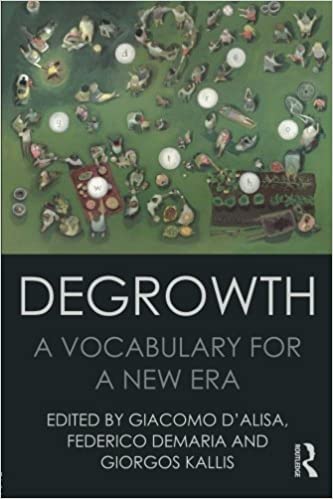
With Covid-19 having slowed down everything, and with frugality in thoughts and actions set in, the idea of 'de-growth' may seem a possibility provided the newfound approach and attitude towards life and life processes persist both at the individual as well as at a societal level. But isn't resisting growth a risk to economic and social collapse? To pursue it relentlessly may be risky one might wonder – endangering the ecosystems on which economy depends. Despite the classical idea of development been declared dead several times in the past, it continues to persist because ‘Ferrari for all’ is the elusive dream everybody has been made to strive for. Will the world be able to produce enough Ferrari for all, and for all those who are yet to be born? The truth is that not in a foreseeable future?  

Even if everyone were to get a Ferrari, it will only be the Fiat of its generation, and may do little good to the society at large. It will only make people yearn for something different and more, without any let down in the unending materialistic desires. The reach of markets into aspects of life traditionally governed by non-market values and norms will only rob us from finding the meaning of life individually. Isn’t unending desires the reason for growing anxiety? 

Its essence may have existed across traditional cultures through the ages, de-growth has been rechristened by a group of academicians at the Autonomous University of Barcelona to pull the society out from its current abyss. Since it was launched at a global conference in Paris in 2008, de-growth has spread across countries engaging researchers and movements to deliberate and elaborate the idea from diverse perspectives. Confronting the idiom of economism head on, de-growth advocates shrinking of production and consumption with an aim to achieve social justice and ecological continuity.   

Spread over four sections, the book is a compilation of easy-to-read essays which argue that the ‘shift’ is indeed possible. It in no way advocates back-to-the-roots journey but suggests learning from indigenous cultures and techniques for paving an autonomous, close-to-nature, and ecological way of life. The challenge is to give expression to indigenous knowledge and traditions that have been oppressed, minimized or subordinated over centuries. However, de-growth can only gain ground provided political strategies support the idea of non-GDP growth.  

Taking cue from the Sarkozy Commission (Beyond GDP) many developed countries are toying with the newer ways to measure progress, and incorporation of the concept of Buen Vivir (living well) in the new Constitutions of Ecuador and Bolivia only indicates that the idea of ‘de-growth’ in its diverse manifestations is catching on. Offering deep analysis, the book argues for a transformative politics that should support such initiatives aimed at decolonizing the imaginary of growth. De-growth challenges techniques rather than just calling for their control, providing alternative ways of thinking about environment and development. 

For new ideas on de-growth like frugality, sobriety, de-materialization and digital commons to sink in, the editors have assembled keywords and concepts to construct a language that can take the discourse on de-growth forward. The book is not prescriptive but suggestive in nature, inviting readers to make their own voyage and reach their own sense of what de-growth means to them. It is a must read for all those who firmly believe that modern economy has reached its dead-end. 

Degrowth: A Vocabulary for a New Era
by Giacomo D’Alisa, Federico Demaria & Giorgos Kallis (Eds)
Routledge, London & New York
Extent: 220, Price: $40 

Sunday, May 3, 2020

Indeed, it is a rough road ahead

A slowdown of economy must lead to de-globalization as the answer to unrestricted acceleration that has over exploited natural resources at the cost of increasing inequality. 

Covid-19 has made the whole situation disruptive, and the near future perplexing. It only shows that despite rapid strides in medicine and artificial intelligence the world is not yet ready to deal with outbreaks of diseases that may shock us in future, as the natural habitats continue to be shortened to bridge the distance between the pathogen and the victim. It has long been argued that changing climate will increase the number of diseases passed from animals to humans, as modern society has not left any opportunity in creating conditions that allow such epidemics to flourish with impunity. That Covid-19 like pandemics will recur with increasing frequency is a foregone conclusion.

At this point when humanity looks scared and confused like a colony of red ants exposed when the garden slab gets lifted without a forewarning, the uneasy question that begs a compelling answer is whether or not Covid-19 represents some sort of a catastrophic tipping point? While the origin of the pandemic may remain shrouded in conspiracy theories, there are good reasons to prepare for change, and ensure that humans survive as a species by reconsidering their relationship with nature. ‘On a battlefield when the odd against winning are seen as insuperable, a well-planned retreat is the best option,’ asserts James Lovelock. With countries under forced lockdown, a slowdown of economy must lead to de-globalization as the answer to unrestricted acceleration that has over exploited natural resources at the cost of increasing inequality. 

An award-winning inventor and an independent scientist for over half a century, Lovelock has made it clear through the Gaia hypothesis (now accepted as a scientific theory) that the planet is not an inert identity. Developed in collaboration with microbiologist Lynn Margulis, the theory propounds that all organic and inorganic components on the planet are part of one self-regulating system, meaning thereby that if the delicate balance that makes this planet habitable is not maintained than the Earth system (Gaia) will act on its own to bring some semblance to the prevailing disorder. Covid-19 has done precisely that, pulling shutters on most human activities such that nature gets to work on its own revival and rejuvenation.  

At an age when human mind stops thinking, Lovelock is brimming with ideas to make others think. Now at 101, he has come out with some outrageous but thoughtful ideas on the future of mankind, and among many of his books A Rough Ride to the Future captures the present predicament like none other. Though he proclaims himself to be an optimist amidst the rapidly changing global conditions, Lovelock has moved beyond the anthropocene, defined as human influence on the planet, into an emerging epoch he calls the novacene, wherein artificial intelligence will rule the world because a time will come when the present oxygen-rich world would cease to exist. But Gaia, the Earth system, will always remain habitable to whatever life form the evolutionary forces toss around.  

The free ranging maverick that he is, Lovelock postulates more heat resistant forms of life to evolve if the planet continues to get warmer. In that case, an electronic life form based on silicon semiconductors, evolved through endosymbiosis, may be the next form of life on earth. This may sound futuristic fantasy but the hypothesis is based on the premise that our present wet carbon-based form of life may find this planet utterly inhospitable in the event of continuous enrichment of carbon dioxide into atmosphere. An electronic life form will be far less temperature-limited than humans, contends Lovelock.

In his lifetime of independent research, Lovelock has raised fresh insights from the practice of science to the future of mankind on account of accelerated evolution. ‘If life on our planet is able to change the climate, it can as well respond to it.’ Seemingly unplanned, Covid-19 has not only enforced such a response but has added to the existing confusion too. Lovelock chides the mistaken idea of scientists and administrators who think that without stabilizing the environment the spurt in such pandemics can be checked. Instead, the idea should be to strengthen our defenses. Like the nests of bees and ants, the task should be to create self-regulating and self-sustaining cities to house humans. Sounds logical, because when we are in a hot desert we try to keep things cool for ourselves without bothering to make the desert a cool place. 
  
A Rough Ride to the Future
by James Lovelock
Allen Lane, UK
Extent: 184, Price: £16.99  

Commissioned by the Hindu BusinessLine

Thursday, April 9, 2020

The road to highways

From the confines of the truck cabin the humane dimensions of a hard-earned livelihoods unfold in its varied forms.

This debut travelogue has two characters: one, a techie who hits the road to escape the stationary world of desktop mobility and two, the multiple images of the ‘other’ who literally drives the economy days and nights on end. Karnail, Raju, Jorawar and Liaqat are possible names of the second character, a devil behind the wheels, whose drunken image sends cold shivers down the road for fellow commuters. Truck de India is an epic encounter between the two – the one who forays into an unplanned journey and the other whose life is euphemism for an endless road travel. What comes out is a delightful read on the life of truck drivers amidst vicissitudes of a marginalized existence. 

Maligned and demonized, the truckers lead a life in relative obscurity while ferrying the overloads of economy across the length and breadth of the country. Ubhaykar encounters inconveniences on and off the road with an adventurous ease to reveal the humane side of the truckers as they go about confronting the objective realities of the society at large. If anything, these drivers have frustratingly developed an uncanny skill of meandering through the underbelly of extortion and corruption to deliver our goods on time. The narrative on oneness of corruption across the country is a grim reminder on how societal apathy has accorded discretionary rights on the powerful to coercively extract from the powerless. 

More than just a fun-filled adventurous trip, Truck de India is as much an ethnographic study of a sub-culture that inhabits ever expanding road network in the country. From the confines of the truck cabin the humane dimensions of a hard-earned livelihoods unfold in its varied forms. At the end, it a compelling survival story of a toiling informal sector which not only harbors silent reserves of endurance but holds an inexplicable optimism towards their lived realities. Within the world of limited possibilities, however, the truck drivers don’t miss out on creating opportunities to survive and thrive with an occasional bout of the forbidden stuff. One begins to empathize with this rare breed whose better part of life is consigned to the vagaries on the highways.  

With a keen sense of history, Ubhaykar discovers more than what he had set out for. That Salem holds the monopoly of manufacturing sabudana; Dindigul over locks; and Namakkal for fashioning trucks out of metal and wood would not have come easily. It is his hop-on hop-off experience that lands him in unexpected places, exposing him to unanticipated kindness and generosity from perfect strangers. Much of it leaves him spellbound. Need it be said that unplanned travels like these allow an unrestricted peep into unedited footage of other peoples’ lives without them feeling any bit violated. Much like Columbus, Ubhaykar discovers another India by chance. Without doubt, it has indeed been worth the effort.  

Truck de India is a moving account of the lived reality of those who confront provocative indignities all their life, and yet conduct themselves in remarkable forbearance. The author wonders if his writing will make any tangible difference to the truckers’ lives! Whether or not it does only time will tell, but acknowledging the role of an informal sector in keeping the economy in sound health is no less commendable. It is this aspect of the narrative that makes the book an interesting and worthwhile read.   

Truck De India
by Rajat Ubhaykar
Simon & Schuster, New Delhi
Extent: 309, Price: Rs. 480.

First published in The Hindu, issue dated March 22, 2020.

Friday, March 20, 2020

Behind a ravaged Tara

The gut-wrenching cars smashing scenes in Rohit Shetty’s films have its share of  dirty secrets too.

We all love watching movies - at home, in theatre or on phone – little realizing that we are complicit in the destruction the film-making unleashes. The images we enjoy do not come from nothing, there are significant material consequences to it. James Cameron’s much acclaimed Titanic had decimated a Mexican sea urchin population and Danny Boyle’s less popular The Beach had wrecked the natural dunes in a Thai island. Not all films are as destructive but film making is not without its ecological carcasses floating in the air, circulating in the water, sinking into the soil, and rustling in the leaves. And it isn’t a recent phenomenon, the dirtiest secrets of film were rarely allowed to surface as we had tacitly accepted to sacrifice the real for the imaginary spectacle. 

It isn’t exaggerated, though! Counted as essentials of an industrial process, daily consumption of 200 million litres of water by (then) Eastman Kodak to produce 80 per cent of the world’s film supply had the audiences’ unwritten sanction. The eco-destruction doesn’t end at that, the methodological complexities of film watching and its disposal is beset with hidden environmental costs. Be it the epic spectacle of fire in Gone with the Wind or the grotesque throwing of dust in Singin’ in the Rain or the digital seduction of reality in Avatar, the nature’s five essential elements are at the receiving end of our insatiable desire for entertainment.    

Hunter Vaughan’s forensic accounting of film-making secrets is an open invitation for the reader to reconnect with the world of films that exposes our representational inabilities to reflect concerns for the environment and human survival. Film is an effective medium and an activist platform to home-deliver sensory reality towards the social ills and the ecological decline, however, the onus of protecting the environment cannot simply be dumped upon the viewer. Should our collective amnesia to the perils of film-making persist, Vaughan argues, the global machinery of entertainment is doomed to repeat the patterns of the past, failing local communities and traumatizing local ecosystems. What’s more, for being less expensive to shoot in Sri Lanka, Thailand or Mexico the decentralized production from transitory locations has transformed film-making as an invasive species, a roaming environmental hazard.   

Hollywood’s Dirtiest Secret reads like a charge sheet on movie making, for causing irreparable damage to the environment. It is an important read that aptly reveals the two-fold nature of film, being both a powerful medium to speak about environmental problems as well as the cause of these very problems. At its core is the issue of our collective ignorance and of voluntary psychosis in accepting the virtual as real. ‘Unless we fully assess the complex relationships among our screens, our desires, and our natural resources, we may not be able to agree on the natural cost we are willing to pay to have art.’ Without getting a deeper sense of such relationships, it hardly resisters on our collective image-space the number of trees smothered to make Transformers tumble on the screen.  

Vaughan, a professor of English and Cinema Studies at Oakland University, makes a plea to re-establish the severed relationships between what is communicated and how it is communicated. It is our screen culture’s socio-cultural contract that needs to be put under the scanner, alongside the need for creating a culture of film making that draws a responsive balance between the medium and the message. It would be a fallacy to believe that things are getting better with the advent of digital technology. Conversely, it has major material and political ramifications with profound personal and social consequences. Even the grandeur of Bahubali could not be possible without the acquisition of analog production materials with high energy and resource-dependent digital infrastructure generating enormous e-waste at the end. 

For those of us who assume that the home-grown gut-wrenching cars smashing screen sequences in most Rohit Shetty’s films have no dirty secrets may need to rethink. Each car smashed is worth 150,000 litres of water consumed in manufacturing it. While disavowing the distinction between real and the imaginary in the quest for spectacular thrill, the likes of Shetty actually implicate the viewer in the dirty secret of ignoring the material real for the virtual.  It is the ‘madness of screen culture’ that Vaughan has put to test his environmental criticism on the methods of film making that externalises almost all costs. Hollywood Dirtiest Secret acknowledges the recent attempts at greening the industry, but argues for serious reworking on the environmental costs of pleasure and communication. Written with passion and commitment, the book holds a mirror to the society in redefining the boundaries of entertainment, as if the environment matters.   

Hollywood’s Dirtiest Secret
by Hunter Vaughan
Columbia University Press, New York
Extent: 243, Price: US$ 30.

First published in the Outlook, issue for the week ending March 30, 2020. 

Monday, March 16, 2020

The fallacy of the new-normal

Unless the wisdom of limitations becomes the mainstream thought, it is unlikely that the human enterprise will reduce its multiples stresses on the biosphere.


It would be hard to reconcile that the species that has all but proven its supremacy with no less than 7.8 billion humans currently dispersed across the globe and growing, has also stockpiled some 15,000 nuclear weapons enough for self-annihilation many times over its present and future  numbers. Even if there are deterrents to pressing the nuclear button, the growing number of humans and their insatiable consumptive desire is sure to suck life out from all other living creatures on this planet. Shockingly, this is the new normal towards which the world is fast hurtling.

And it doesn’t concern many that at this pace future generations are bound to inherit a different planet, perhaps inhospitable. Expanding human mobility, spreading modern conveniences, multiplying commodities glut, and enabling food choices have given unrestricted boost to the idea of human expansionism even as nature is screaming for freedom from such an onslaught. That there is a global ecological crisis of unprecedented magnitude knocking at our doors hardly registers. Instead, what often gets argued is that techno-managerial leap of progress will sail humanity through such adversities. With man-made disasters mounting by the day, how far can market-driven technologies be able to contain the collapse of its own making? 

Virginia Tech professor Eileen Crist takes on this overwhelming question from all pervasive and disturbing ideas that not only human impact on nature is natural but maintaining wilderness is a defunct idea that doesn’t augur well for human freedom and economic welfare. It is a constructed reality that harbors multitudes of challenges for human survival on this planet. Even though it is not widely acknowledged, a belief in human supremacy is anything but self-destructive. While being optimist that an ecological civilization is not an altogether utopian idea, she questions why significant steps have not been taken by humans to live in loving fellowship with our earthly wild without whom the exuberant dance of seasons, diversity, complexity and abundance will remain mere screen savers in our virtual world. Abundant Earth is a beautifully crafted book that not only touches upon the ‘why’, ‘how’ and ‘what’ of the impending ecological crises but provides ‘what next’ of an integral way of life to halt the inevitable. 

Enlisting direct causes and unraveling underlying drivers leading to the eco-crises at hand, Abundant Earth challenges the false sense of human supremacy while calling for a challenging task of scaling it down and pulling back. Despite it being politically controversial, the book strongly advocates the need for reframing the population question because ‘over-consumption’ and ‘overpopulation’ are two faces of the same coin. Given an all pervasive mainstream trend to bring the entire population at a universal consumer standard, the projected ballooning of global middle class to 5 billion by 2030, from the present 3.2 billion, will turn the earth into an unimaginable waste bin. The world can ill-afford such a transformation, which will cause an irreversible blow to the biosphere if it hasn’t done that already!

Crist is clear in her assessment that an immediate turn in the direction of a global ecological civilization is the only option. For such a change to happen, the current trends of economic growth and techno-managerialism would need to take a break. Unless the wisdom of limitations becomes the mainstream thought, it is unlikely that the human enterprise will reduce its multiples stresses on the biosphere. While making a fact-filled assessment of the current dystopia, Abundant Earth draws a realistic blueprint to halt the decline. Crist deserves appreciation for writing a book that will appeal to a wider audience interested in the affairs of the Earth.  

Abundant Nation
by Eileen Crist
The University of Chicago Press, London
Extent: 307, Price: US$35.

Published in AnthemEnviroExpertsReview, and in Current Science, issue dated July 19, 2020.

Tuesday, January 28, 2020

Similar, but different nonetheless

In their quest to create an identity distinct from India, an Islamic identity has only proved regressive for a vibrant plural society.

For the people of any country an engagement with their lived reality plays a significant role in renegotiating an identity that is distinct from the political identity thrust upon them by the nation-state. Such an identity describes the history from below, concerns itself with the ordinary people, the ruled, and how they define and steer history rather than the rulers. It is such social history that lends color and agency to the barren economic and unintelligible political history of a country. Contrary to how a country may be seen and understood, exploring it through aspects of arts, literature and heritage offers a distinct reflection on its society and people. Pakistan is one such country whose politically constructed one-religion-one-culture identity has subsumed a vibrant narrative on its pluralist identity, typecasting it as a national security state. Through insightful and revealing essays, Raza Rumi constructs an alternate view of the country that has continued to be in transit since its traumatic birth in 1947. 

Pakistan of the present is not what it used to be in its formative years, the partying, drinking and dancing country of the seventies has long ceased to exist. Gone are the days when bars were commonplace in major urban centers, and when musical fanfare at the shrines of saints defined the cultural outlook of the country. The ruling elite had other plans, though. In their quest to create an identity distinct from India, an Islamic identity only proved regressive for a vibrant plural society. Being Pakistani is a bold attempt at capturing the multilayered narrative in search of its lost identity, dislocated in the linearization of its predominant Islamic narrative. 

Rumi argues that the country’s identity has tragically been imagined by the ruling class only within the context of militarization and jingoism, characterized by an anti-India strategic worldview which has gripped the state and society beyond redemption. It has seemingly gone beyond repair as global media has consistently reaffirmed such reductionist image of a country. Although there isn’t much being done to denounce the culture of militancy as yet, there is simmering discontent and an undercurrent of dissension emerging among the writers, artists and musicians who have begun to contest the one dimensional image of the country.

The very fact that there are poets and writers challenging the rising tide of extremism and violence in the country – regardless of who the originator of such crises may be – is a welcome shift, and a testament to the rich heritage of country’s literary history, and its dynamic present. Reflection of such expressions in the works of present generation of poets, writers, and miniature artists should be important for the region, as it reinforces the shared cultural values of love and compassion expounded by none others than Kabir, Bulleh and Lallon.

In drawing this emerging image of Pakistan, Rumi is convinced that much of it rests on the idea of civilization which a separate nation has only tried to suppress. Written with a compassionate concern, the essays dig deep to acknowledge the impact of shared sub-continental identity which the constructed reality of nationalism has only tried to undermine. One begins to empathize with the author, whose personalized sense of alienation in his own country reflects his unrequited love for his homeland which, he says is not-so-silently imploding.  

Without doubt, such genuine voices can hardly appease the repressive regimes on either side of the borders. No surprise, Rumi is living in exile after an attempt on his life that killed his driver but spared him. As an erstwhile officer in the Pakistan Administrative Service, he currently teaches at the Cornell Institute of Public Affairs and also edits the Daily Times, published in Pakistan. In challenging his reductionist identity, Rumi draws a broad canvas of the most populated multi-religious, multi-lingual and multi-cultural region from in the context of building a holistic understanding of civilizations, nations and communities.

If Pakistan is not a monolithic mass of popular imagination, so is the entire region which has historically been a multi-layered composite of immense diversity, argues Rumi. For peace and prosperity to dawn on this region, there is a compelling need to revisit and revive its rich traditions because “whether it is fighting communalism in India, or extremism in Pakistan and Bangladesh, the Sufis, Bhaktas, mystics, and Bauls have much to offer to make South Asia a safer and more prosperous part of the world community.”

Being Pakistani: Society, Culture and the Arts is a call to listen to voices of shared interests, and similarities in culture. Rejuvenation and preservation of our cultural memory is essential to our collective survival, else a thousand years of history will get rubbed into the dust of jingoism.

Being Pakistani
by Raza Rumi
HarperCollins, New Delhi
Extent: 302, Price: Rs 399.

This review was commissioned by The Hindustan Times.

Saturday, December 21, 2019

The age of insubstantiality

Ironically, we are living in the undefinable present that urges us to give up courage, make cowardice a virtue, and see that both real and virtual war doesn’t end.

There is no denying that we are living in anxious times, not knowing where we are treading from day to day. What prevails is a ubiquitous lack of substance with a deadly insubstantiality, which has left us with a painful sense of inadequacy. Much evolved though it may seem, both the society and the systems have instead invoked Nietzsche’s fateful phrase ‘Nothing is true, everything is allowed’. 

It is the truth that beholds onto us, that revives the echoes of W H Auden’s The Age of Anxiety. In this context, Roberto Calasso’s The Unnamable Present is a brutal but meditative inquiry into the undefinable present that urges us to give up courage, make cowardice a virtue, and see that both real and virtual war doesn’t end.  

Pulling nuggets from literature and philosophy of the recent past, the book examines the ongoing project of dehumanization that has blurred the distinction between the tourists and the terrorists. Aren’t both out there to destroy the creation of nature, he asks? With algorithmic information eating into human consciousness, mythomania has become the new normal. We only need a plug into it to ensure its constant supply. I found compelling reasons to agree with Calasso’s proposition that, much like the world that made a partially successful attempt at annihilating itself during the Second World War, our unnamable present too is hurtling towards a murderous path. When was the last time we were shown such a hexed mirror? 

Discomforting and disquieting, The Unnamable Present leaves a lot unsaid that the discerning reader can find strewn between the lines. One thing is clear that the past continues to haunt us. What may been seemingly been foregone returns in different form. Rightly said, people may have got rid of Hitler and Stalin but not the society that created them. 

Creation of democracy as an antidote to dictatorship has come to reflect a wishful nothing, extending to everyone the privilege of access to things that are no longer there, which lugs within it the seeds of self-destruction. Not an easy read though, but The Unnamable Present should be credited for raising new questions on the obscure process of transformation happening in our society. 

The Unnamable Present
by Roberto Calasso
Allen Lane, New Delhi
Extent: 193, Price: Rs. 799.

First published in the Hindustan Times, issue dated Dec 21, 2019.

Tuesday, December 17, 2019

Those who came to conquer it

Imagining geographical spaces through religion limits our understanding by imposing and justifying an ideology at the cost of ignoring its inherent richness.

Richard Eaton, who teaches history at Arizona University, argues that India was never a self-contained stagnant civilization as is often believed but one that evolved over centuries of intense engagement with other peoples and cultures. Starting from the conquest of Mahmud Ghazni to the exploits of Nadir Shah, Eaton reconstructs the most compelling but consequential historical accounts, from c.1100 to c.1765, which produced a hybridized composite civilization that has sustained its distinct identity. India in the Persianate Age defines those seven centuries as an epic period of engagement with the other regions, especially the Persian, which had contributed to producing a rather harmonious society. It was the British who reduced it to the Hindu-Muslim binary, thereby inflicting a deep divide that has continued to dominate socio-political discourse ever since.      

In his brilliant exposition spanning the prolonged medieval period in history, Eaton questions the convention of seeing a diverse and vibrant culture through religious lens. ‘Imagining geographical spaces through religion limits our understanding by imposing and justifying an ideology at the cost of ignoring its inherent richness’. The reading of history in terms of mutually exclusive religions has only helped one form of nationalism, however, at an enormous recurring cost to the society. Decoupling history from such an assumption alone can provide an unbiased measure on acceptance of the political authority, notwithstanding a ruler’s own religion, by a socially, linguistically and religiously diverse Indian society. 

What the colonial historians read as ‘Muslim conquest’ was indeed a period in history that had consolidated multiple ethnic identities viz., Rajputs, Marthas and Sikhs, and empowered them to define their terms of collaboration with then rulers. Far from acknowledging it, the self-serving Anglophone historians sought to paint the entire period as despotic and unjust to lay unilateral claim on pulling India from seven centuries of so-called Muslim subjugation towards modernity. It is no less than a historical conspiracy to erase that part of history as ‘dark and backward’, with the sinister aim of justifying the brutal suppression by the British as ‘mild and equitous’. Curiously, the colonial takeover was not branded as ‘Christian conquest’.    

Challenging the colonial claims on introducing India to modernity, India in the Persianate Age provides comprehensive account of the cultural exchanges between the Sanskrit literary traditions and the Persian cosmopolitan outlook that led the Mughals to rationalize their empire by applying the secular outlook to the religious traditions of their subjects. Noticeable is the fact that both Sanskrit and Persian were not the ‘language of place’, and consequently expanded over much of Asia not by force of arms but by emulation, and without any governing centre. This is a significant take from the book which provides perfect backdrop to medieval India becoming the centre for the patronage of Persian literature and scholarship.   

What makes Eaton’s assessment of the medieval history distinct and insightful is its treatment of the otherwise illustrious period on its own terms without today’s biases. From architecture to science and from trade to cuisine, the assimilation of the Sanskritic universe with its Persianate counterpart is well evident. The persistence of several Persian words including hukm (grace of God), langar (communal meal) and biryani (flavoured rice cuisine) in everyday usage signifies that it was a neutral language for daily correspondence and literary expression. Covering vast swathes of the Persian influence on the making of India, Eaton pays a fine tribute to the evolution of India as a compassionate civilization.  

Ambitious in its undertaking, India in the Persianate Age has enough to ruffle the feathers of today’s nationalists. It is a fat but immensely readable volume that elaborates the long-term process of cultural interaction and assimilation that is reflected in language, literature, attire, science, art, music, governance and warfare. It goes to the rich cultural traditions of India that those who came to conquer it, in the end, were conquered by it. 

India in the Persianate Age
by Richard M. Eaton
Allen Lane, New Delhi
Extent: 489, Price: Rs. 999.

First published in The Hindu, issue dated Dec 15, 2019. 

Saturday, December 14, 2019

Pulling sense out of the wasteful

Travel offer the thrills of impromptu encounters and the pleasures of unpredictability, provided one is ready for it.

Boondoggles got me thinking. How could the 'word' which by definition is considered 'wasteful' be a subject for a book by an academic known for his scholarship on William Blake? That the book was less about the idiosyncratic views of the noted British poet, painter and print-maker but more on the curious adventures of a Canadian professor from his extensive travels, which accrued to him on being a scholar on the noted genius, eased my task of engaging with the book. For the raconteur extraordinaire Jerry Bentley, boondoggle meant being paid for doing something which he wanted to do anyway. Lady luck played generous on him!

Travels offer the thrills of impromptu encounters and the pleasures of unpredictability, provided one is ready for such forays. Jerry was undoubtedly ready, armed with the talent of creating research pretexts to travel to the far corners of the globe. Converting such travels into smart writing is no less challenging; the reader must find the mosaic of personal experiences and encounters engagingly relatable. After all, it is not the stating of simple facts but what the reader can make out of it. Boondoggles is an edited volume of the diary entries of the travels of a restless professor by his daughters, Sarah and Julia, who found a reflection of beauty and empathy in their parents approach to life worth sharing.

Jerry helps the reader go back in time, from the 1950's to the 80's, when most of his travels were made. The world may have dramatically transformed over a short time, though. Back in the 50s, Jerry could not share a room with his wife Beth, both in Brussels and in Paris, as her maiden name was not matching in the passport. What’s more, getting the front desk at the hotels to read the amendment at the back of the passport was futile. Unlucky has a subjective connotation, as relationships between couples, straight or otherwise, draw multiple meanings today. 

Boondoggles give the reader the liberty to read the book in parts, as countries offer distinct social and cultural underpinnings to reflect upon. It is partly a book of adventure as the author traveled across continents with his young family in tow. To learn from a bear-researcher in Norway the art of coming out unscathed from wild bear encounters is gut-wrenching but educative. The book has lots on offer even on countries that a reader might have been to, as Jerry noted: ‘joy comes not from the fact but what you make of it’.

Perhaps what makes this book different from other travel writings of the kind is its treatment of the situations and encounters, swinging between plain anecdotes and curious reflections. That goes to its advantage too, as a reader can find quite a bit enmeshed between lines. Among many, I was particularly intrigued by Jerry’s interpretation on the versatility of how a lungi is worn in southern India. It is not without reason that it is worn floor-length, knee-length, thigh-length or even shorter. Could it be a kind of emotional flag, flying at half mast or full-mast, reflective of its wearer’s mood? Amusingly, it could be anybody’s guess!

Boondoggles makes for interesting reading, reflective, amusing and educative. However, the shorter boondoggles could have been excluded, and the academic endeavors held back for another volume. It would have made Boondoggles a slimmer book with diverse flavors.   

Boondoggles: Travels of a Restless Professor
by G E Bentley, Jr. 
Friesen Press, Canada
Extent: 297, Price: $ 17.63.

Monday, December 9, 2019

The quest to outwit superbugs

Antibiotic resistance is currently the cause for an estimated 700,000 deaths globally, and a business-as-usual scenario may force this figure to swell to 10 million deaths per year by 2050.

Released in 1997, Richard Ashcroft’s emotive and string-filled ballad ‘the drugs don't work, they just make me worse' is now a ground reality, as resistance to drugs has thrown millions into the throes of the biggest medical emergency of our time. Assigning medical meanings to the lyrics, Professor Sally Davies had cautioned the world on the diminishing power of anti-microbial and anti-bacterial drugs in her 2013 book with similar title ‘The Drugs Don’t Work’. Alarming as it is, antibiotic resistance is currently the cause for an estimated 700,000 deaths globally, and a business-as-usual scenario may force this figure to swell to 10 million deaths per year by 2050. In other words, the superbugs evolved out of such resistance are consuming a staggering 32 Boeing 747’s full of people every week. 

It has emerged as a man-made disaster since antibiotic development after Alexander Fleming’s accidental discovery of penicillin in the middle of 20th century did not keep pace with the growing microbial resistance, leaving the pipeline of drugs almost on the verge of drying up. Given in small doses over short courses, antibiotic research and development did not generate the profit margins for pharma companies, and consequently no new class of antibiotics has been discovered in the past three decades. In the meantime, bacteria mutated so fast that most antibiotics were left ineffective and redundant. However, for decades it remained the best-kept secret in medicine.  

With anti-microbial resistance attaining global attention, it is no secret that the world is moving towards a dark, post-antibiotic future. It may already have, given that in 2017 only 41 anti-biotic drugs were in clinical development compared to more than 500 for cancer. Just when the world needs more antibiotics to fight infections, their development has shockingly come to a halt. 

In these troubled times, Superbugs is a narrative of hope written from the front lines of clinical trials to fight resistant infections. Taking the readers on a ride through the troubled history and uncertain future of medicine, Matt McCarthy provides a gripping account of how he led a clinical trial to save Jackson, a gunshot infected victim, from a likely amputation or a possible loss of life. In an unnerving and unpleasant world of medicine that has held itself accountable to shareholders and not patients, McCarthy chartered a course of action to evoke Big Pharma to invest in the drugs than can save millions of lives and prove financial viable. 

It was a sense of urgency that led McCarthy to avoid colistin, the last resort medicine to treat life-threatening infection, as it had proved ineffective (rather fatal) on patients on last two counts. However, to preserve colistin from becoming ineffective in humans anytime soon, the Indian government has already banned its manufacture, sale and use in the poultry industry. McCarthy had other reasons to put a new drug,  Dalbavancin (or Dalba), on trial for which he needed volunteers to sign up. What followed is an educative and inspiring story of people like Ruth, George, Erwin, Gerard and Jennifer who had successfully volunteered to let future skin-infection patients, nearly twenty million develop a skin infection each year, deflect from the perils of the modern hospital. 

Superbugs could not have better timed, as anti-microbial resistance has gained worldwide attention as an important public health challenge, with serious impact on economy and development. It is relevant for India, which is home to some deadly infections like diarrhea, pneumonia, typhoid, encephalitis and dengue with cumulative human casualty across different age groups in excess of five million each year. While the challenge is to get the most out of the existent formulations by avoiding overuse and false prescriptions, there is also a need for more focused process to hunt for antibiotics in most unlikely of places viz., sewage, polluted lakes, and the intestines of insects. After all, dalba was made by extracting a large molecule from a bacterium found in Indian soil in the 1980s during a hunt for antibiotics. 

Essential take home from this path-breaking book is that microbes are engaged in making new chemicals under our feet that could eventually end-up saving millions of lives. Just beneath the topsoil are tiny molecules that could alleviate disease and stomp out epidemics. Researchers like Sean Brady at Rockefeller University have now confirmed that dirt is the best place to find antibiotics.  Brady’s team found two dozen new drugs from the genes harbored in dirt from Prospect Park in Brooklyn. Instances like these are pointers towards developing a strategy to scan the most unexpected of places for next big breakthrough in medicine. For Davies, nothing less than economic incentive for the pharma industry will make it scan the dirt lying around.  

McCarthy knack of storytelling comes handy in weaving an interesting narrative on unraveling the complexities of working among biomedical researchers, the pharmaceutical industry, and the drug administration. Superbugs are throwing new challenges and fresh opportunities as they pop up with equal ease in New Delhi and New York – overcrowding and insanitation being the common feature of urban living. Superbugs is a passionate account of one person’s quest for easing the tension between institutional bureaucracy and patient care, in testing a life-saving drug for the society at large. The story holds ethical and moral underpinnings, a compelling combination that allows the author to shed few tears as he describes the stories of his patients. It makes for an informative and absorbing reading, equally urgent and empathetic, on a subject that is close to our skin. Superbugs is a must read tale of medical ingenuity. 
.               
Superbugs –The Race to Stop an Epidemic
by Matt McCarthy
HarperCollins, New Delhi
Extent: 290, Price: Rs. 599

First published in the Hindu BusinessLine, issue dated Dec 9, 2019.

Friday, December 6, 2019

Emerging out of self-infliction

What women need to understand is that they too have power to make a difference.

Ancient myths and legends relegate women as proverbial sacrificial lambs in the gendered narrative of our history. Yashodhara is one such, who was made to suffer protracted isolation as her husband abandoned her in his spiritual journey to attain enlightenment as the Buddha. Although forced to suffer for none of her doings, her sacrifice did not find a respectful place in the grand narrative, and neither her story features prominently in the religious histories. Could there be more to the story that has been told in numerous times over the centuries? 

By giving a fictional spin to the grand old story, Sahitya Akademi award winning author P Lalitha Kumari aka Volga re imagines Yashodhara as a well-defined woman with a distinct spiritual mind, and an agency of her own. Far from being the victim that she has been made out to be, Yashodhara emerges as a woman of strong character who frees Siddhartha from family obligations to pursue the path of knowledge. ‘I must make the path of the pathfinder more comfortable for him to tread upon’. The young girl had a worldview that shaped the course of religious history, becoming the tower of strength behind Siddhartha. 

Yashodhara is an example of propulsive storytelling, bursting at the seams with insights and reflections on empathy and compassion. An important figure in feminist literature, Volga’s retelling of Yashodhara story is a call for women to partake in intellectual learning, and not to be left behind. ‘What women need to understand is that they too have power to make a difference’. In her rewriting of mythical characters, Volga’s feminist exploration grants them the strength to outgrow their victimhood and take an exemplary role of their lives. Such empowering narratives need to be heard more often in these troubled times.

Reimaging the epics from the eyes of its leading women characters has evolved as a genre, leading to a gendered retelling of the history. From Draupadi’s version of Mahabharata in The Palace of Illusions by Chitra Divakaruni to Urmila’s assessment of Ramayana in Sita’s Sister by Kavita Kane, feminist writing has come a long way in interpreting religious histories for the modern readers. Having narrated Ramayana from the perspectives of its female characters in The Liberation of Sita, Volga has added Yashodhara to her repertoire. It is a welcome addition to this genre, for building a nuanced understanding of our past. 
                                 
Yashodhara
by Volga 
Harper Perennial, New Delhi
Extent: 176, Price: Rs. 299.

This review was commissioned by The Hindu.